

Underneath the Fear


I posted a note recently about fear.
About how it doesn’t always announce itself. About how it sits quietly in the back of everything — every decision, every conversation, every ordinary Tuesday.
I wrote it because I know that fear. I live inside it.
But here’s what I didn’t say: my fear isn’t just about dementia.
My mother is 83 years old. She stopped driving three years ago. She has a bad heart. She forgets things sometimes — not constantly, not dramatically, but enough that I notice. She’s pulling back from friends in a way that’s new. She has less energy for the world than she used to.
After my father died, I asked her if she wanted me to stay.
She said yes.
So here I am.
What I didn’t tell you — what most caregiving content never talks about — is that not every caregiving relationship starts from a simple place of love.
My mother and I have a complicated history. That’s the polished version of what I’d say in public. The real version is harder. She was sometimes physically abusive when I was young - nothing dramatic…but abusive nonetheless. She was emotionally abusive for much of the rest of my life. I have spent decades in a complicated dance with her — loving her, fearing her, distancing myself from her, grieving the mother I didn’t have, trying to make peace with the one I did.
And now I am her caregiver.
The fear I carry isn’t fear of dementia. Not exactly.
It’s fear of what happens to me inside this role.
It’s fear of losing myself in a situation I’ve been trying to navigate safely since I was a child.
It’s fear of what I’ll feel if things go wrong — guilt, maybe. Relief, possibly. And then guilt about the relief.
It’s fear that I made the wrong call when I asked her if she wanted me to stay. That I said yes to something I shouldn’t have. Or that I should have said it sooner, differently, with more conditions, fewer conditions — I genuinely don’t know.
Here’s what I’ve learned from writing The Dementia Chronicles for over a year:
Caregivers are allowed to have complicated feelings.
You are allowed to love someone and be afraid of them at the same time.
You are allowed to show up for someone and not know why you’re showing up — whether it’s love, duty, obligation, guilt, or something that doesn’t have a name yet.
You are allowed to be a caregiver and also a person who has been hurt.
Nobody tells you that.
The books don’t tell you. The support groups are sometimes not safe enough to say it. The medical professionals hand you pamphlets. Your friends don’t really understand.
But I’m telling you now: if your caregiving situation is complicated by history — by hurt, by distance, by a relationship that was never simple — you are not alone.
You are also not wrong for being here anyway.
I’m still figuring out what I’m doing and why.
The Shadow Work I’ve been reading lately keeps asking me to look at what’s underneath the surface — to name the things I’ve been calling something safer. Stress. Exhaustion. “A lot on my plate.”
Underneath it, if I’m honest, is fear.
And underneath the fear, if I go further — I’m not sure what I find. Maybe just more fear. Or something that feels like the oldest instinct I have: run.
I haven’t run. I’m still here. But I won’t pretend that staying has been a simple choice, and one I consider more often than I’d care to admit.
I don’t know if staying forever is possible. I’m still trying to figure that out.
If you’re caregiving for someone who hurt you — or someone you have unfinished business with, or someone you love in a complicated way — I want you to know this:
Your feelings make sense. All of them. Even the ones that contradict each other.
You don’t have to have it figured out to show up.
And you don’t have to be okay to keep going.
💜
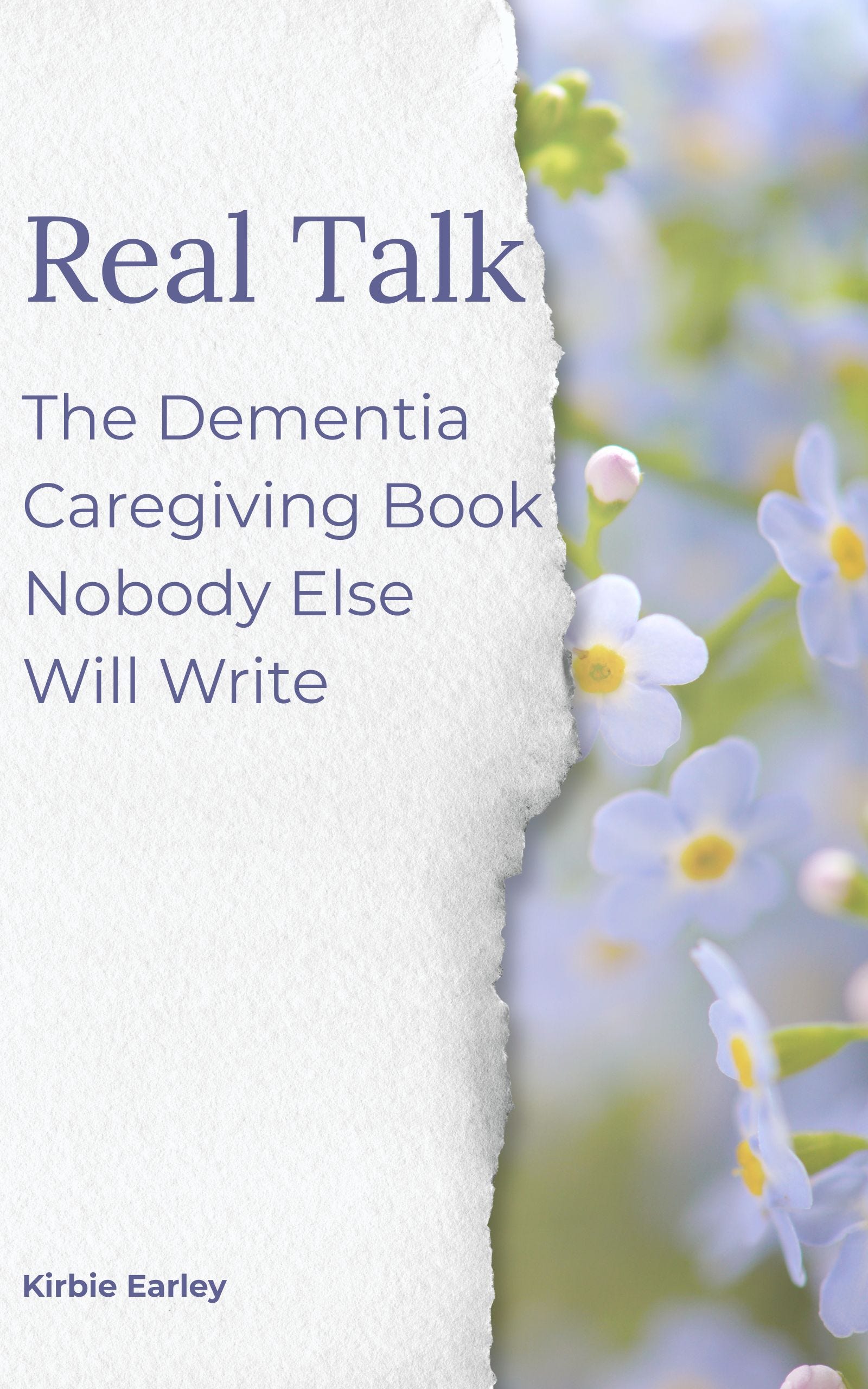
Real Talk: The Dementia Caregiving Book Nobody Else Will Write is available for preorder on Amazon. It’s the book I wish I’d had — honest, practical, and written from inside the experience, not above it. If this resonated with you, I think it will too. The book will be live for sale on June 3, which was my father’s birthday.
I know a few people have said that they boycott Amazon, and while I can respect that, it is really one of the few avenues for authors to use that doesn’t require thousands of dollars up front just to get published (yep that’s how it works…), so if you can set aside your boycott for an old author, she’d really appreciate it - then you can go back to your boycott 😄
Kirbie, you have raised my heart rate and the hackles on my neck. Your story sounds so familiar. My mom is 78. My relationship with her sounds quite similar to the one you have with your mother. My mother was demanding, ruthless and highly critical. there was a sprinkling of physical abuse and lots of emotional abuse. I always told myself I would not become her caregiver. However, when my stepdad passed away a few years ago, she decided to relocate to my city. My brother also lives here but he automatically stated he would not be involved with her care. I decided I was going to set up lots of barriers and protect myself. However, with time those barriers have been breaking down. I see the beginnings of memory loss and worsening mobility. I know what is coming. I am also a neurologist who has nearly 30 years experience treating dementia, but this does not help. It just makes me more aware of what is coming. To tell you the truth, I'm not sure what I am going to do going forward.
Thanks a lot for sharing that!
I also had a complicated history with my mother. I didn't understand why I had to take care of her, not my sister, who was very close to her. As a single and jobless daughter, everyone expected me to take up this role, regardless of how I felt. Honestly, I wanted to do it, and it helped me forgive her, but it was beyond my ability, and it broke me.